From Incident to Investment
How Operational Evidence Becomes a Governed Investment Decision
I2I in one view
A visual map of the Governance Chain and the Memory Doctrine.
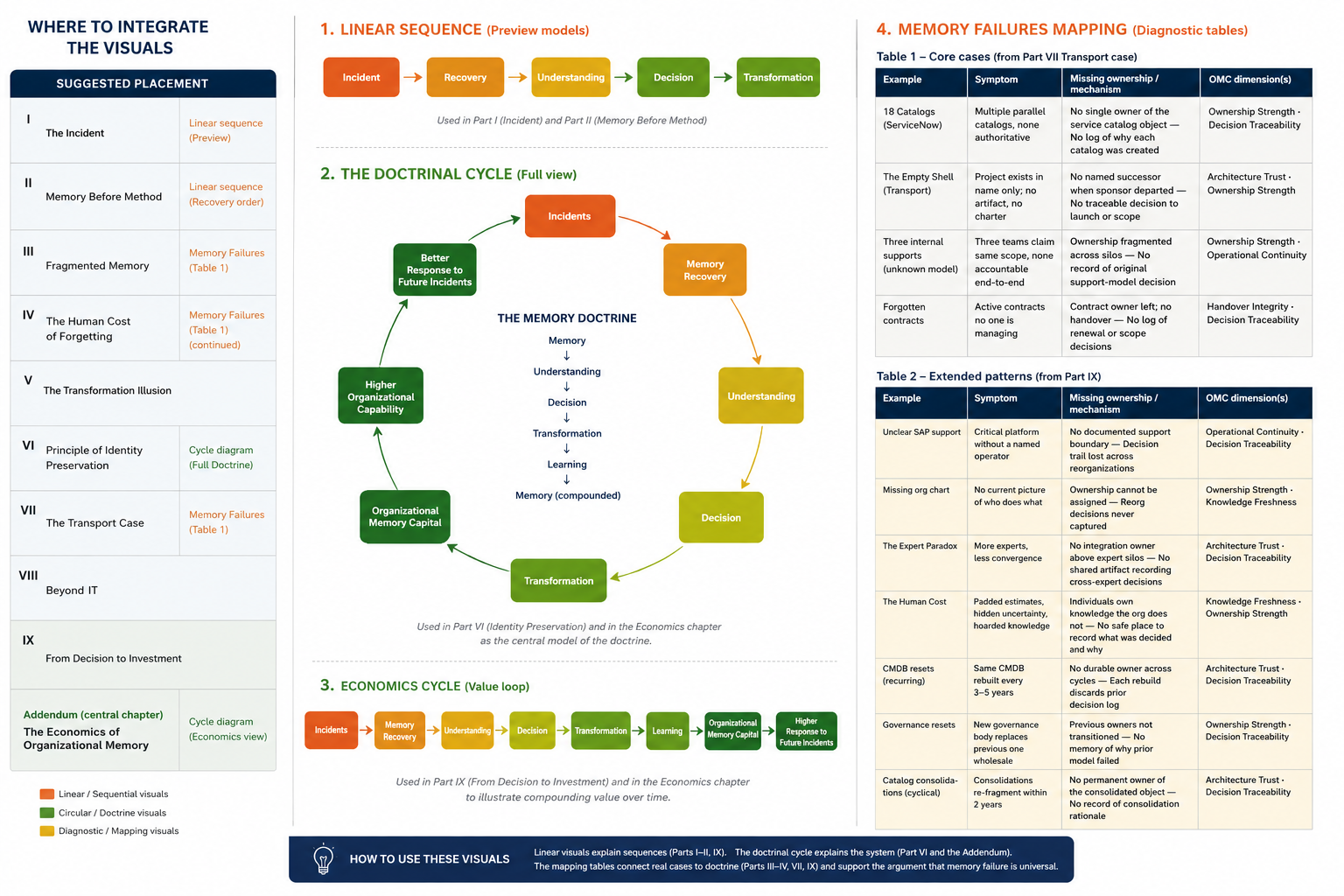
The argument is simple: incidents become organizational memory only when they are recovered, understood, decided upon, transformed, and learned from.
The second book of the trilogy takes the mechanism established in Book 1 and follows it through the one place every organization already produces evidence: operational disruption.
Recurrence is not an operational failure. It is a decision that has not been made, and cannot be shown to have been made. This book shows how accumulated operational evidence becomes an authorized investment decision instead of permanent, invisible expense.
The method is structural, not cultural: evidence → authorized decision → action → evidence, held in one accountable record.
The manuscript is published exactly as written. Shared mechanism of the trilogy: Evidence → authorized decision → action → evidence.
Read the full book →- Full book (PDF)The complete manuscript, unabridged.
- Executive Summary (PDF)One page, for the decision itself.
- Executive Paper (PDF)The full argument in paper form.
- Executive Deck (PPTX)The argument in presentation form.